
How Do You Define a Major Gift?
An average of 2.8% of a charity’s database has the potential to be a major donor. If the database contains 100,000 records this is an overwhelming 2,880 people with the potential to give significant gifts.
Why there is no fixed definition of a major gift
There is no universal answer to what counts as a major gift. Most charities that contact us expect a fixed figure — £1,000, £5,000, £10,000. The honest answer is that the right threshold depends entirely on your organisation's resources, not on a sector benchmark. Here is how we approach it.
What constitutes a Major Gift
Here at Money Tree Fundraising, one of the most common questions that we get asked is ‘How do you define a major gift?’, with our clients expecting us to state a fixed sum for them. Others come to us with their own pre-determined definitions and there is huge disparity between their answers.
When approaching this common, yet important, question we approach from a different angle to most: resource allocation. It is no secret that any organisation has a limited supply of resource, and every one of us understands that for a major donor programme to truly thrive, time is the key resource that must be invested for the development of deep and real relationships.
The resource allocation approach: how to find your threshold
So, let’s think about it strategically…
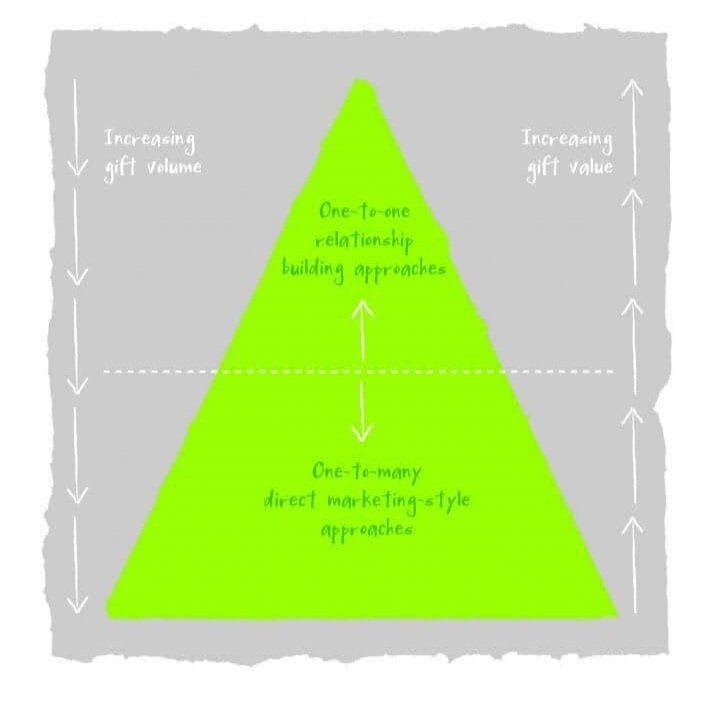
First, take your database and rank it by potential gift size. Next, consider how much resource you can allocate to a major gift programme. Can you allow one day a week of your Chief Executive’s time, or do you have an established team of several dedicated major donor fundraisers?
The next step is to slice off whatever you can afford in terms of time and resource. This is your definition of a Major Gift.
Anyone above your slice receives personalised, one to one, relationship building, and anyone below receives your one to many approach; be that a mid-value or your regular giving programme.
What your definition means for your donor relationships
By following this rule of thumb, you can feel confident not only that you are dedicating the right level of resource but you will be maintaining your capacity to delight every potential donor.
WATCH the video as Money Tree Fundraising CEO, Beth Upton, discusses our approach to resource allocation, and the secret to building successful relationships.
Assess your programme's approach to segmentation
The Scorecard assesses your approach to prospect research and pipeline management — including how you identify and prioritise who counts as a major donor. Take it free in five minutes.